
Hims and Hers, founded in 2017 has emerged rapidly as a leader in the tele-health and online pharmacy industry. Revenue has exploded to $2 billion in the last twelve months up from just $83 million in 2019!
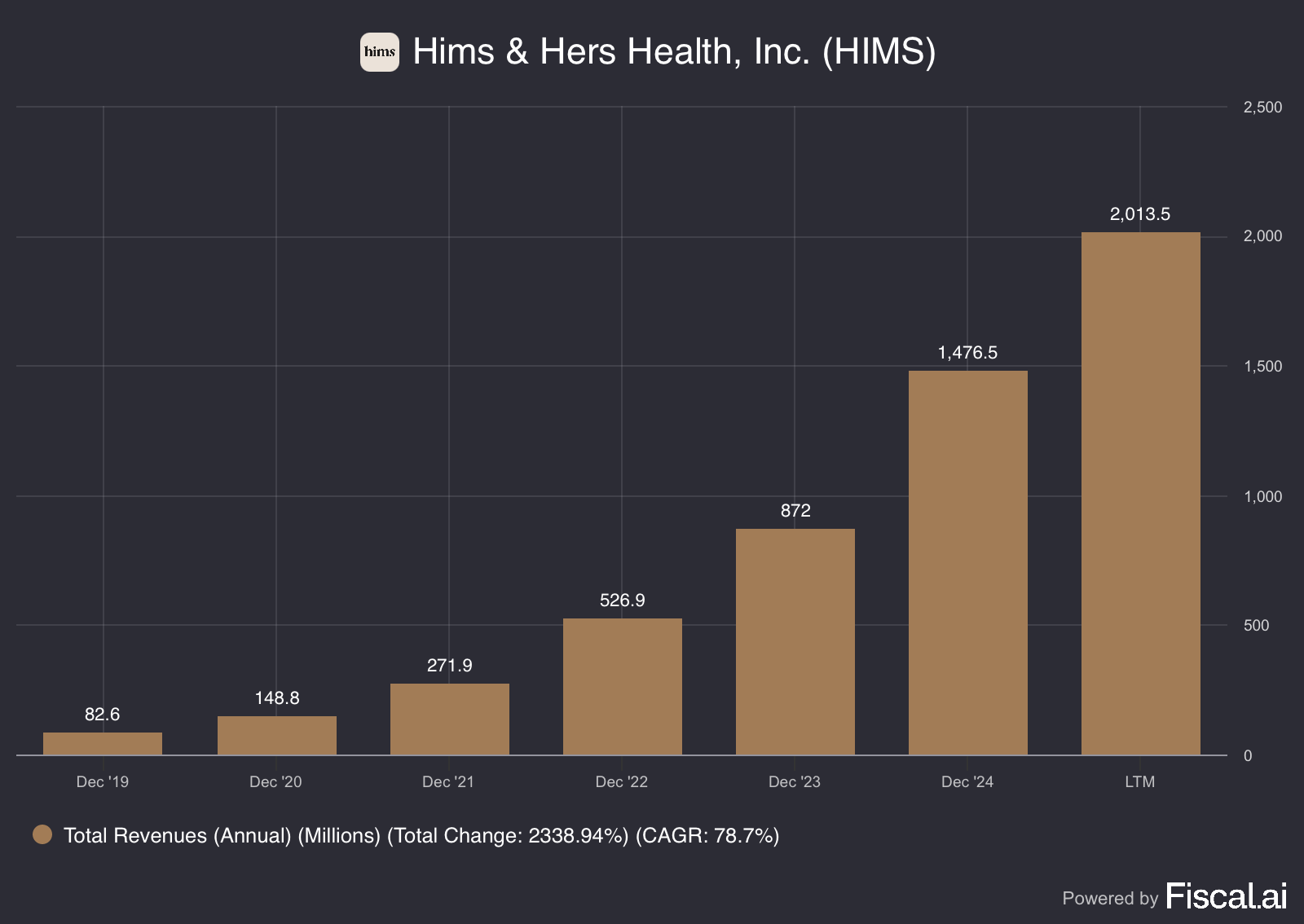
Despite this growth the stock currently trades at a humble P/S ratio of 5. For years skeptics have questioned its moat and the sustainability of its business model. And yet Hims and Hers has continued to blow revenue numbers out of the water and dominate the competition. Hims management has exhibited exceptional execution thus far and has made recent decisions that telegraph their vision: to transform itself into a broader direct to consumer healthcare platform.
Size of the Opportunity
The opportunity for Hims and Hers to disrupt legacy health care structures is massive. As of late many have begun classifying Hims and Hers as a “GLP1 company” as a significant part of their revenue growth has come from GLP1s over the past year. However, this misses the bigger picture of what management is building: a consumer first digital healthcare platform.
Healthcare is a massive multi trillion dollar industry and Hims and Hers has rapidly and efficiently expanded into new categories while being profitable. GLP1s are a very small part of this opportunity when zoomed out. In fact GLP1s are part of a much larger industry within pharmaceuticals called peptides, which are in the early part of what appears to be an explosion in interest and use worldwide.
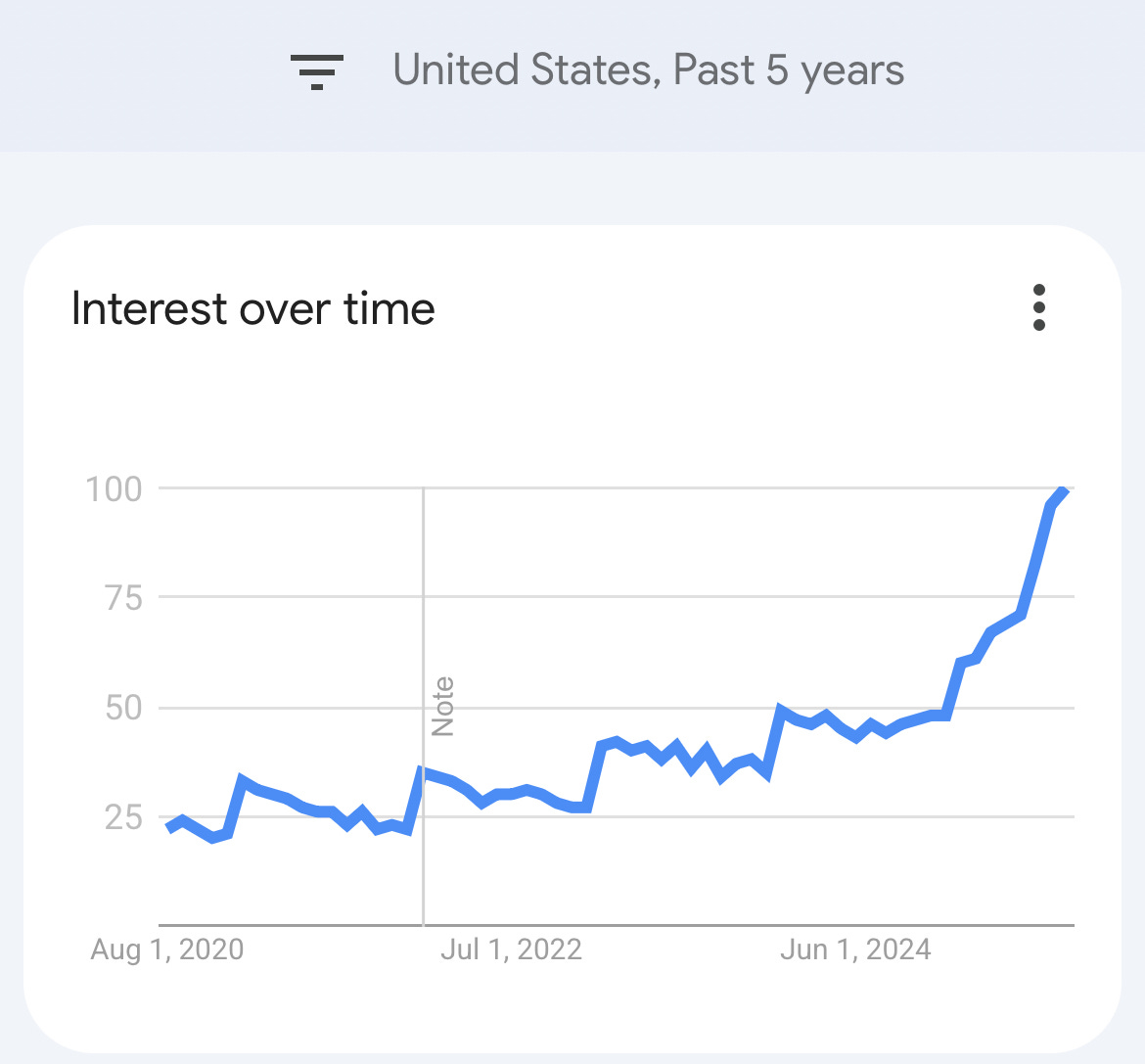
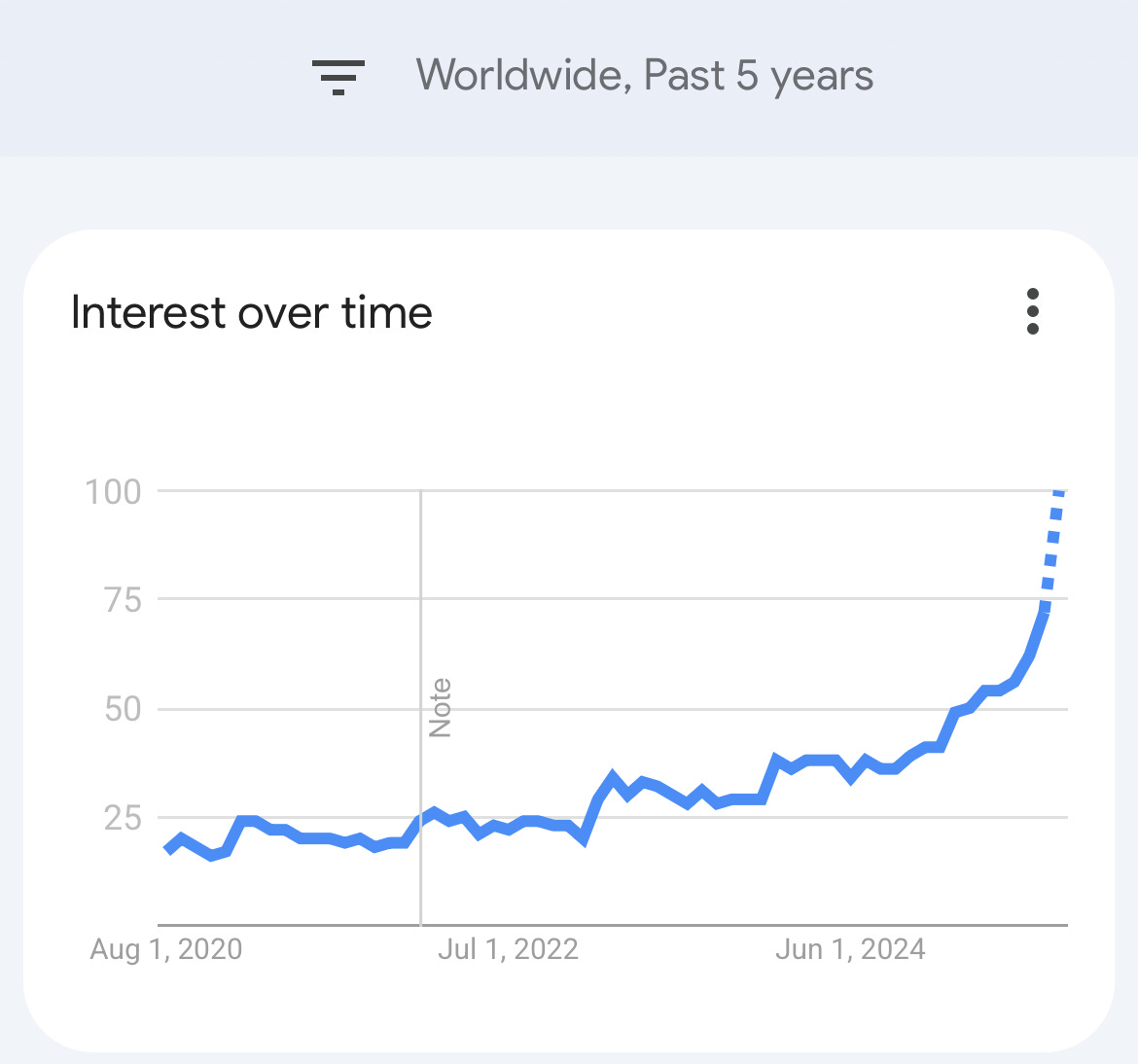
In February 2025 Hims purchased a peptide manufacturing facility as peptides along with at home testing and hormones appear to be its next target category. If previous performance is an indicator it is likely that Hims will be able to expand into these categories rapidly and profitably. The expansion into these categories still only represents a small sliver of the opportunity that direct to consumer healthcare presents.
Why Hims is Winning
Hims is redefining healthcare by eliminating the friction points that make it frustrating and unenjoyable. Through a few key strategic decisions, the company has set itself apart from competitors and is building durable competitive advantages that will only strengthen over time.
Hims’ strategy begins with a pure direct-to-consumer model, removing insurance entirely. This creates a simpler, more transparent healthcare experience that strengthens customer relationships and enables the company to move faster than traditional competitors. By avoiding the inefficiencies of insurance, Hims can expand into new categories more quickly, achieving economies of scale that drive pricing and distribution advantages.
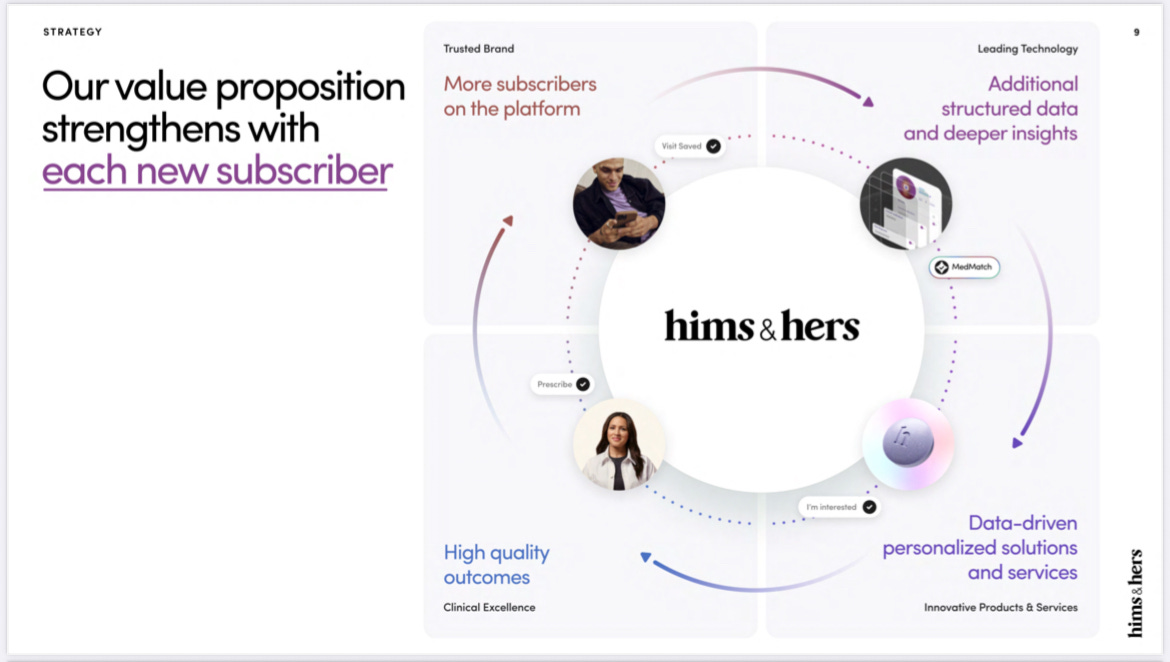
Equally important, Hims has made personalized medicine a core focus of its business model. This not only enhances the customer experience but also increases retention by creating stickier relationships. Today, 60% of subscribers are enrolled in personalized treatment plans, underscoring the strength of this approach.
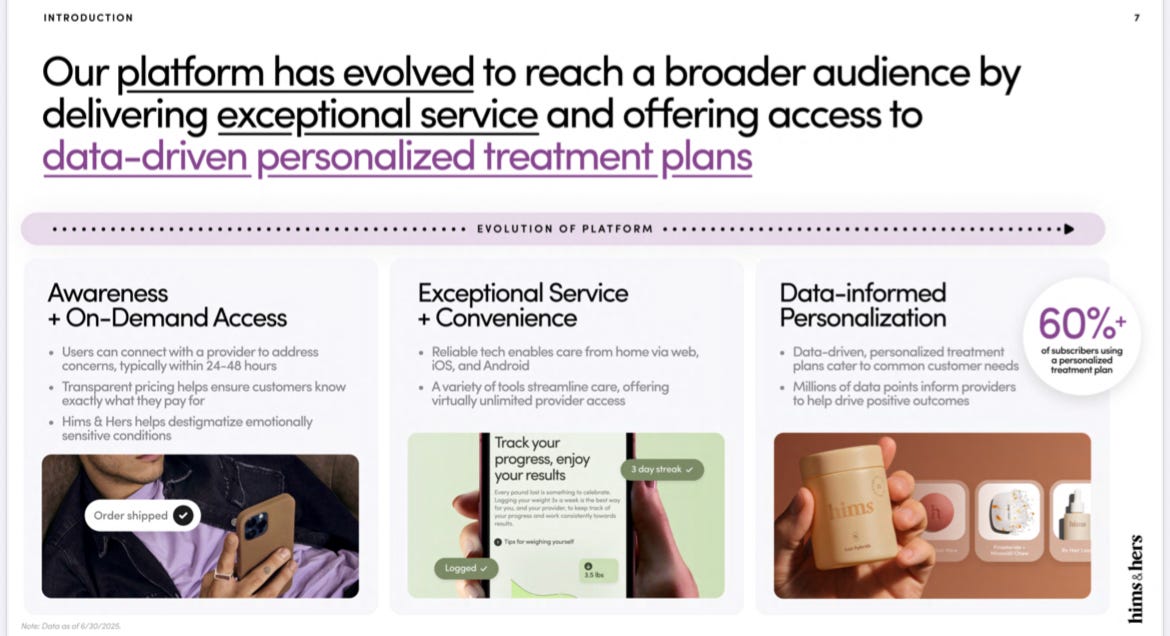
One key advantage of Hims’ faster moving business model relative to its peers is the ability to collect valuable data at an accelerating rate. This data will not only enable Hims to leverage AI across every part of its business but also drives more personalized care. Most importantly, it helps ensure that customers receive the right treatment quickly, efficiently, and at the lowest possible cost.
Risks
Healthcare is inherently risky, particularly due to legal and regulatory challenges. Hims’ bold strategy, which is reshaping the healthcare landscape, has drawn significant attention from established incumbents.
Currently, the market’s attention is centered on regulations governing the compounding of GLP-1s. Concerns escalated after Hims’ distribution agreement with Novo Nordisk for its GLP-1 was abruptly terminated.
Novo Nordisk cited Hims continued manufacturing of compounded GLP-1s as being the reason for the sudden termination adding that
“…Hims & Hers Health, Inc has failed to adhere to the law which prohibits mass sales of compounded drugs under the false guise of ‘personalization’ and are disseminating deceptive marketing that put patient safety at risk.”
Despite this Hims has remained steadfast that they are not only following the law, they are putting patients first by continuing to compound. Hims CEO Andrew Dudum cited that the company “refuses to be strong-armed by any pharmaceutical company’s anticompetitive demands that infringe on the independent decision making of providers and limit patient choice,” pointing out that under Section 503A and 503B of the Federal Food, Drug, and Cosmetic Act, licensed pharmacies are legally permitted to compound medications when there are shortages or when a physician determines it is medically necessary. By emphasizing these regulatory frameworks, Dudum argued that Hims is acting squarely within federal law while ensuring patients maintain access to critical GLP-1 treatments.
It is likely that as Hims business expands to new categories more regulatory and legal hurdles will arise. Management has thus far shown a great ability to manage these obstacles efficiently while not disrupting the businesses success and growth.
Conclusion
Hims is an emerging direct-to-consumer healthcare giant hiding in plain sight. Its competitive advantages are still early in development, which makes them appear subtle at first glance, but they are steadily strengthening. The company is well on its way to delivering on its promise to make healthcare more accessible, enjoyable, and transparent.
While risks remain, they are largely priced into the stock, leaving significant upside potential at current levels. With endless opportunities to expand into new categories, Hims offers long-term investors a rare chance to get in early on what could become the “Amazon of Healthcare.”